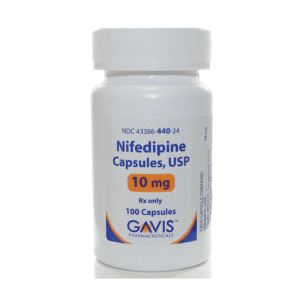
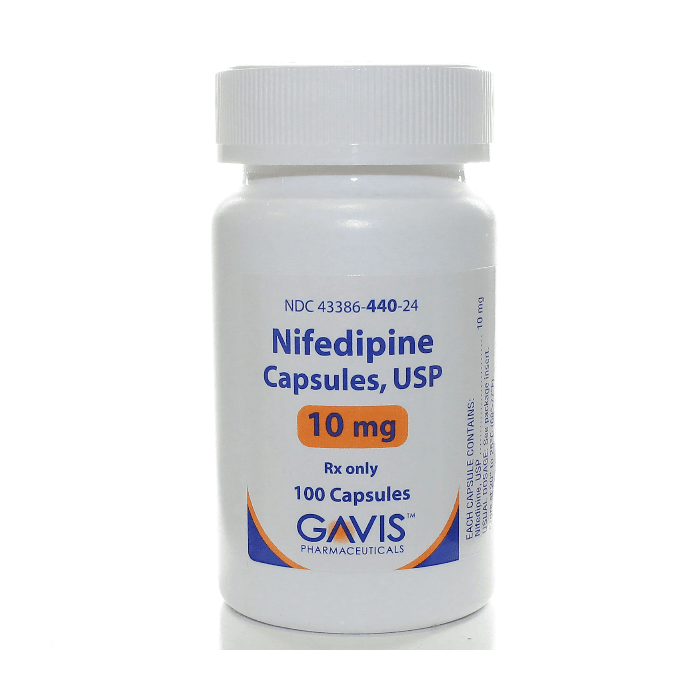
Uses of Nifedipine
Nifedipine is a calcium channel blocker that works by relaxing blood vessels and reducing the heart’s workload.
Is primarily used for:
- High Blood Pressure (Hypertension) – Helps relax blood vessels, making it easier for the heart to pump blood.
- Angina (Chest Pain) – Improves blood flow to the heart by dilating coronary arteries, reducing the risk of chest pain.
- Raynaud’s Phenomenon – Relieves symptoms by improving blood circulation to the fingers and toes.
Precautions and Warnings
Who should not use nifedipine?
People who are allergic to any of the following should not use/take nifedipine.
- Procardia
- Procardia XL
- Nifedipine
- Any of the ingredients in the specific product dispensed
Your pharmacist can tell you all of the ingredients in the specific nifedipine products they stock.
Do not take nifedipine unless it has been prescribed to you by a healthcare provider. Take it as prescribed.
Do not chew, cut, or crush nifedipine extended-release tablets.
Do not share nifedipine with other people, even if they have the same condition as you. It may harm them.
Dosage
The dosage of nifedipine can vary depending on the condition being treated.
The usual doses is 10 mg, taken 3 times daily. The dosage can be increased gradually, typically to a maximum of 20-30 mg 3 times daily.
Side Effects
Common Side Effects:
- Headache
- Fatigue
- Dizziness
- Constipation
- Nausea
- Hot or warm feeling in the face (flushing)
- Swelling of the legs and ankles (edema)
Serious Side Effects:
- worsening angina;
- a light-headed feeling, like you might pass out;
- pounding heartbeats or fluttering in your chest;
- chest pain or heavy feeling, pain spreading to the jaw or shoulder, nausea, sweating, general ill feeling;
- swelling in your ankles or feet; or
- upper stomach pain, jaundice (yellowing of the skin or eyes).