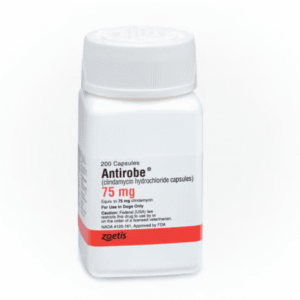
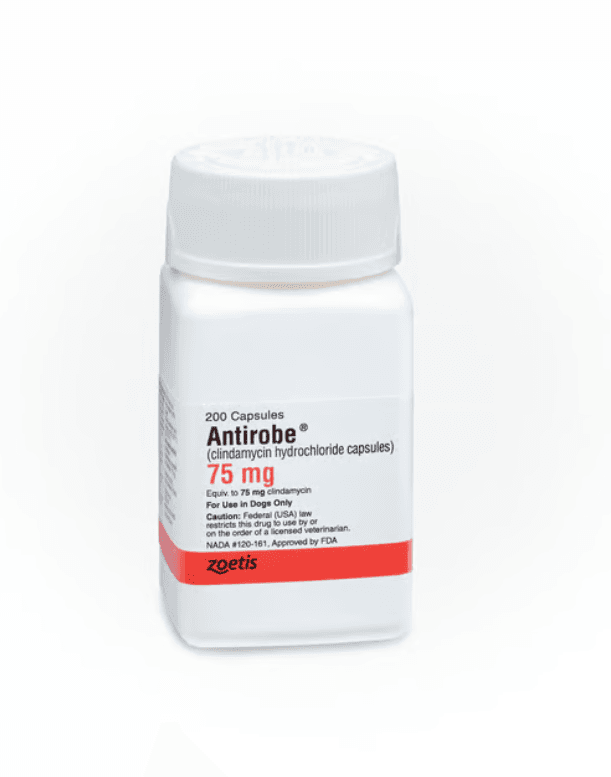
Antirobe (Clindamycin) is a prescription antibiotic for dogs used to treat bacterial infections. It is especially effective for wounds, abscesses, dental issues, and certain skin and bone infections.
Benefits
- Treats infected wounds, abscesses, and dental infections
- Also effective for superficial pyoderma (skin infections) and osteomyelitis (bone infections)
- Offers reliable coverage against bacteria like Staphylococcus, Streptococcus, Bacteroides, Fusobacterium, and Clostridium perfringens
Dosage
- Infections (wounds, dental, abscesses): 5.5 mg/kg every 12 hours OR 11 mg/kg every 24 hours for 7–10 days
- Superficial pyoderma: same dosage options, usually for about 21 days
- Osteomyelitis: 11 mg/kg every 12 hours for at least 28 days
Warnings and Precautions
- Do not use in animals with hypersensitivity to clindamycin or lincomycin
- Unsafe in species like rabbits, hamsters, guinea pigs, horses, and ruminants due to severe gastrointestinal upset
- May cause overgrowth of resistant organisms like clostridia or yeasts — always monitor
- Prolonged use warrants liver and kidney monitoring, and blood counts
- May interact with neuromuscular blocking agents and certain antibiotics (e.g. macrolides)
How to Use
- Follow your veterinarian’s dosing plan carefully
- Complete the full treatment course even if symptoms improve early
- If no response is seen within 4 days, re-evaluate the diagnosis
Storage
- Keep at room temperature, not exceeding 25°C (77°F)
- Store in original packaging to protect from moisture and light
- Keep out of reach of children and pets
Side Effects
- Common adverse effects include gastrointestinal upset — vomiting, diarrhea, reduced appetite
- Rare or serious effects like allergic reactions or disruptions in gut flora should prompt veterinary re-evaluation