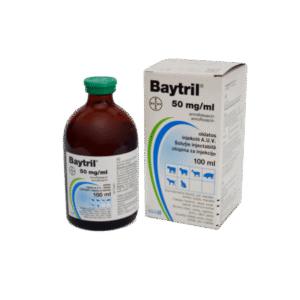
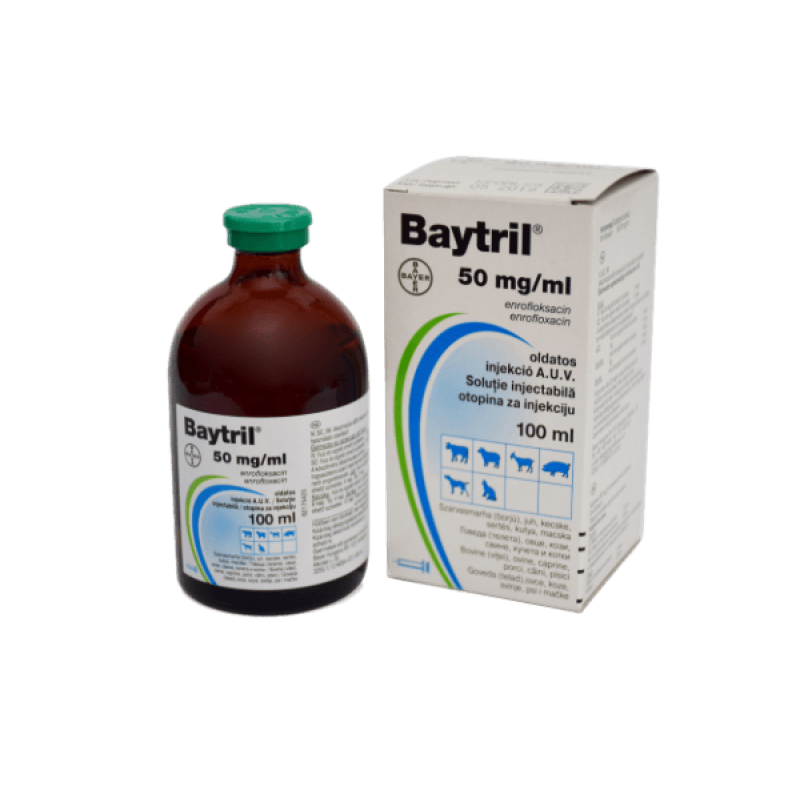
Baytril Injection is a veterinary antibiotic used to treat bacterial infections in dogs and cats. It contains enrofloxacin, a broad-spectrum fluoroquinolone that kills bacteria by stopping their growth. This injectable form is often used when rapid or precise dosing is needed, or when oral medication is not possible.
Benefits
- Treats a variety of bacterial infections including skin, urinary, respiratory, and gastrointestinal infections
- Provides fast and effective treatment through injection
- Suitable for pets unable to take oral medication
- Can be used when oral antibiotics are ineffective or not tolerated
Dosage
- Administered by a veterinarian via injection under the skin or into the muscle
- Dosage depends on your pet’s weight, condition, and type of infection
- Treatment length varies; follow your vet’s instructions carefully
- Typically given once daily, but your vet will decide the exact schedule
Warnings and Precautions
- Not recommended for use in puppies under 8 months (large breeds under 12 months) due to joint risks
- Use cautiously in pets with kidney, liver, or nervous system issues
- Avoid use in pregnant or nursing animals unless specifically advised by a vet
- Inform your veterinarian about any other medications or supplements your pet is receiving
- Not suitable for animals allergic to fluoroquinolone antibiotics
How to Use
- Only to be administered by a veterinarian or trained professional
- Follow the prescribed dosage and treatment duration strictly
- Monitor your pet for any adverse reactions during treatment
- Inform your vet if you miss a dose or if symptoms worsen
Storage
- Store at controlled room temperature (15–30°C or 59–86°F)
- Protect from light and freezing
- Keep out of reach of children and animals
Side Effects
- Common: mild pain or swelling at injection site, decreased appetite, vomiting, diarrhea
- Possible: lethargy, dizziness, restlessness
- Serious (contact your vet immediately): seizures, allergic reactions (swelling, rash, difficulty breathing), limping or joint issues in young animals