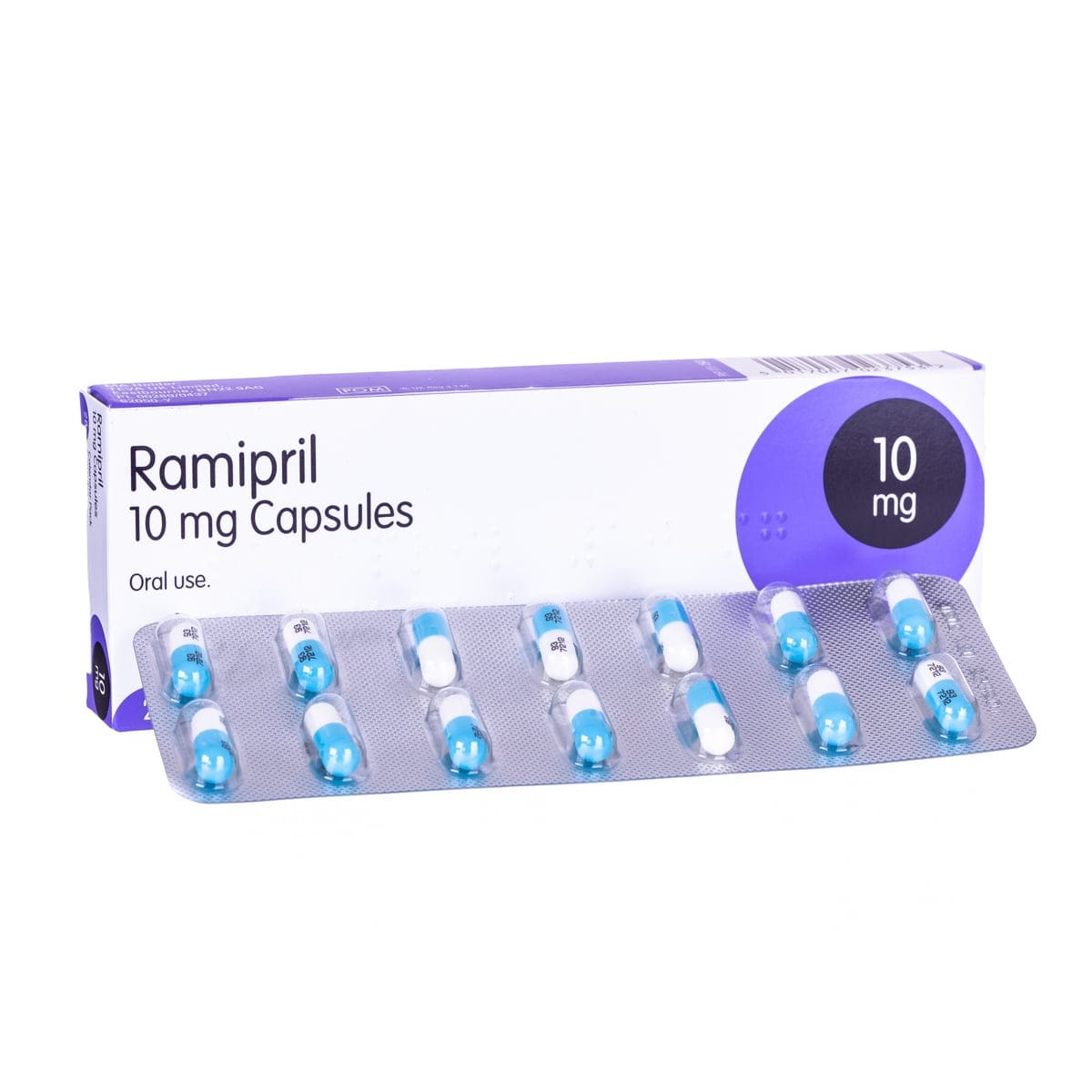
Ramipril is an ACE (angiotensin-converting enzyme) inhibitor used to treat high blood pressure (hypertension), heart failure, and to improve survival after a heart attack. By relaxing blood vessels and reducing workload on the heart, Ramipril helps lower blood pressure and prevents complications like stroke, heart attack, and kidney problems.
Benefits:
- Lowers high blood pressure, reducing the risk of cardiovascular events
- Helps manage symptoms of heart failure by improving heart function
- Protects kidney function, especially in individuals with diabetes or chronic kidney disease
- Reduces the risk of heart attack and stroke in individuals at high cardiovascular risk
- Improves survival after a heart attack
Dosage:
- For high blood pressure, the usual starting dose is 2.5 mg once daily, which may be adjusted up to 10 mg daily depending on response
- For heart failure, the typical dose starts at 1.25 mg once daily, gradually increasing based on tolerance
- For post-heart attack care, the initial dose is generally 2.5 mg twice daily, which may increase to a maintenance dose of up to 10 mg daily
- Always follow your healthcare provider’s instructions for dosage adjustments
Usage Instructions:
- Take Ramipril exactly as prescribed, usually once or twice a day
- Swallow the capsule whole with a glass of water, with or without food
- Take it at the same time each day to maintain consistent blood levels
- If you miss a dose, take it as soon as you remember, unless it is close to the next dose
- Do not stop taking Ramipril without consulting your doctor, even if you feel better
Storage Information:
- Store Ramipril at room temperature, between 68°F to 77°F (20°C to 25°C)
- Keep the medication in its original container, away from moisture and heat
- Keep out of reach of children and pets
Warnings and Precautions:
- Ramipril may cause dizziness, especially when starting treatment or increasing the dose. Avoid driving or operating machinery until you know how it affects you
- Inform your doctor if you are pregnant or planning to become pregnant, as Ramipril can harm an unborn baby
- Avoid potassium supplements or salt substitutes unless directed by your doctor, as these can increase the risk of hyperkalemia
- Notify your healthcare provider of any history of kidney or liver problems, angioedema, or any other medical conditions
- Regular blood pressure checks and kidney function tests are recommended during treatment
Common Side Effects:
- Dizziness or lightheadedness
- Cough
- Fatigue
- Nausea or upset stomach
- Headache
- Rarely, angioedema (swelling of the face, lips, or throat)